
Comme nous le savons, la première traduction en français des paroles de Mâ Ânandamayî vient de Jean Herbert, recueillie sous l'intitulé "Aux sources de la joie"...
Il y a quelques années, je m'étais étonné de trouver une édition datant de 1946, je ne savais pas que la toute première datait de 43. J'étais en pleine construction de ce site et je n'avais pas vraiment eu le temps d'approfondir la question. Mais aujourd'hui, je reviens sur ce point.
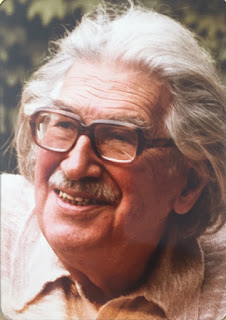
Pourquoi Jean Herbert (1897–1980), qui était cet homme ?
Comment peut-on éditer en 1943, en pleine guerre, en France occupée ?
Et pourquoi, dans ces moments historiques difficiles, éditer les paroles d'une sainte dont personne n'a entendu le nom, alors que certains sages indiens sont déjà très connus à l'époque en Occident, comme Vivekananda, Ramakrishna, Ramana Maharshi, Krishnamurti, et bien sûr Aurobindo... ?
Jean Herbert a été l’un des grands érudits du XXe siècle. C’est lui qui, un des premiers, nous a ouvert les portes de la sagesse orientale. Son œuvre d’orientaliste est gigantesque, incontournable.
Atmananda disait :
"Avez-vous lu "Sad Vani" ? En français, ce livre s'intitule "Aux Sources de la Joie".
C'est un livre écrit par Bhaiji, traduit en anglais par son oncle Sri Gangacharan Das Gupta, et traduit en français par Jean Herbert.
Jean Herbert était un homme tellement extraordinaire.
II avait tout de suite "reconnu" Mâ. Il savait...
Il a traduit ce livre en français en 1939. Et à cette époque, c'était le seul livre sur Mâ, traduit de l'anglais dans votre langue.
Bhaiji est mort en 1937, et deux ans après, Jean Herbert sortait déjà la traduction française."
Vishvabandhu
Jean Herbert, après avoir voyagé en terres musulmanes puis dans le monde bouddhiste, arrive à Pondichéry en 1934 (il a 37 ans à ce moment-là) non pas pour rencontrer Sri Aurobindo, mais chargé simplement de remettre une lettre à un artiste qui vivait dans l'ashram. Il pense n'y faire qu'une brève escale.
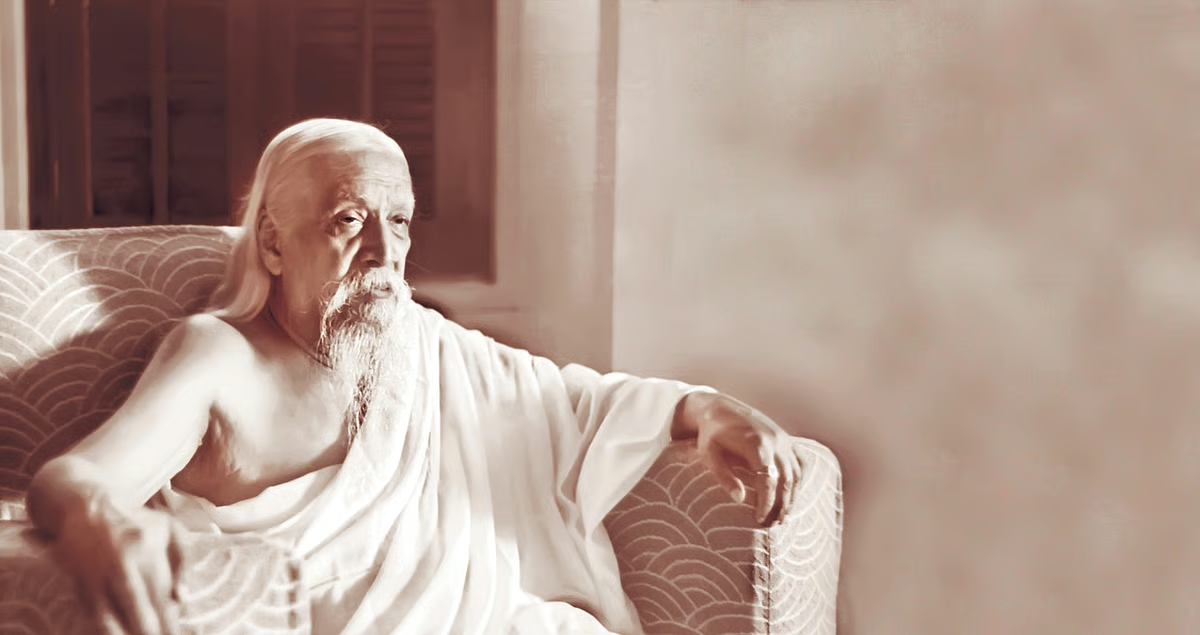
En 1934, à l'âge de 62 ans, Sri Aurobindo vit reclus dans son ashram de Pondichéry.
Il s'est retiré de la vie publique en 1926 pour se consacrer entièrement à sa pratique spirituelle, le Yoga intégral, en confiant la direction de sa communauté à sa proche collaboratrice, la Mère, Mirra Alfassa.
Sri Aurobindo n'est pas seulement un yogi. C'est un homme qui a été formé à Cambridge, qui a milité pour l'indépendance indienne, qui connaît l'Occident de l'intérieur.
Jean Herbert, interprète polyglotte formé à la SDN (Société des Nations, l'ancêtre de l'ONU), reconnaît en lui quelqu'un qui parle les deux langues — Orient et Occident — avec une égale maîtrise. Le "coup de foudre" intellectuel et spirituel est immédiat.
Un an plus tard, en 1935, Sri Aurobindo accepte Jean Herbert comme disciple et lui transmet son initiation, qui se fait typiquement par le darshan — la présence, le regard, le toucher de la main sur le front (sparsha). C'est un acte qui reconnaît le disciple, lui indique sa voie, et l'inscrit dans une relation guru-shishya. Ce n'est pas une rupture avec sa vie antérieure, mais une orientation. Selon la tradition hindoue, une initiation donne premièrement l'indication de la voie à suivre, deuxièmement la soif, et troisièmement la force de le faire — force dont Jean Herbert est un symbole.
L'orientation de cette voie s'inscrit entièrement aussi dans l'attribution d'un nom, Sri Aurobindo lui donne ainsi un nom qui lui convient à merveille : Vishvabandhu.
Ce nom (vishva (विश्व), "l'univers", "le tout", "le monde entier" et bandhu (बन्धु), "l'ami", "le frère", "celui qui lie") signifie "l'ami de tous les êtres" ou "l'ami de l'univers".
Sri Aurobindo l'a choisi comme divulgateur de son œuvre et de son message. Il lui demande de traduire ses ouvrages en français et de les faire traduire dans d’autres langues.
Par le témoignage de sa fille, Yvette Herbert, on sait que son père voulait rester à Pondichéry pour devenir disciple d'Aurobindo.
"Mais Sri Aurobindo me dit que ma place était en Europe. Il voulait que je fasse connaître au public francophone son message et celui des maîtres orientaux. Et aujourd’hui, son nom se répand énormément parmi les jeunes, les éducateurs, les psychologues, dans toutes sortes de milieux. "
Le nom Vishvabandhu n'est donc pas seulement une description de ce qu'Herbert était — c'est une mission assignée, presque un renoncement : renoncer à la retraite contemplative pour servir le monde par les livres.
La traduction et la publication
De retour à Paris, Jean Herbert rend compte de ce premier séjour à Romain Rolland, qui lui demande d’approfondir l’œuvre amorcée par lui sur la spiritualité hindoue, c’est-à-dire de faire connaître à l’Occident non seulement Sri Aurobindo, mais aussi Râmakrishna, Vivekananda et les autres guru traditionnels et authentiques de l’Inde moderne.
Là est le point de départ de son oeuvre.
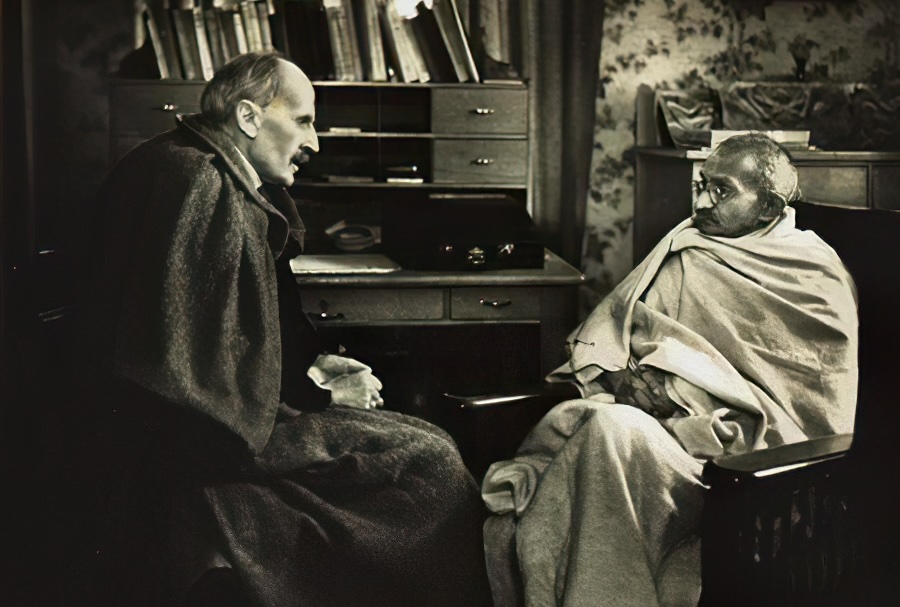
à Villeneuve en décembre 1931. Photographie de Rodolphe Schlemmer
(Musée de l'Elysée, Lausanne) © tous droits réservés.
Jean Herbert s'installe à Genève en 1937 principalement pour des raisons professionnelles liées à sa carrière d'interprète, un métier dont il fut l'un des pionniers mondiaux. Ce statut d'interprète international pour de grandes organisations (comme la SDN) lui confère des revenus solides et une liberté de mouvement. C'est précisément ce confort matériel et professionnel qui lui permet de financer et d'enchaîner ses longs séjours en Inde entre 1937 et 1939 auprès de Ramana Maharshi, Swâmi Ramdas, Mâ Ananda Moyi, Swâmi Shivânanda, Nanga Bâba. Il ne s'agit pas de tourisme spirituel : il rencontre personnellement les maîtres, les écoute, puis revient en Occident pour traduire. Il peut lire le bengali, le sanskrit, l'anglais et comprend de l'intérieur ce qu'il traduit.
"Oui. J ai eu le privilège invraisemblable de pouvoir m’asseoir non seulement aux pieds de Shrî Aurobindo mais également de Râmana Maharshi, du Swami Râmdâs et de Ma Ananda Moyî, et d’autres encore qui ont bien voulu m’accueillir et me communiquer leur enseignement soit oralement, soit en m’autorisant à traduire leurs œuvres."
Pour Jean Herbert, c’est un travail considérable qui commence. Un travail considérable mais aussi un travail ingrat car, dans les années 30, personne ne s’intéresse à ses manuscrits et il est obligé de publier ses premières traductions à compte d’auteur et de faire du porte à porte chez les libraires pour déposer des exemplaires de ses ouvrages.
Donc, pendant près de dix ans (jusqu'en 44), il doit s’endetter pour publier à ses frais des livres qu’il colporte ensuite chez les libraires.
Ce qui fait l'originalité de Jean Herbert, c'est qu'il a toujours voulu présenter l'Inde vivante : c'est le spiritualisme hindou contemporain qu'il présente par priorité, même s'il le replace dans le développement de la Tradition. En s'immergeant directement dans la sagesse originelle, il a suivi une voie que peu de ses contemporains empruntaient.
"Mais je me suis heurté, au début, à une opposition considérable. Les orientalistes ne concevaient pas qu’on aille se renseigner sur l’hindouisme auprès des hindous!… Ils estimaient en savoir beaucoup plus que les tenants des religions étudiées; ils ne les prenaient même pas au sérieux…"
Il ne suit pas du tout les courants académiques de son époque, bien au contraire, il les critique avec lucidité. Il refuse par exemple d'ajouter sa propre glose occidentale ou de "corriger" les textes. Sa démarche avec Sri Aurobindo ou Ramakrishna est de s'effacer totalement.
Il considère que ces sages s'expriment depuis un plan de conscience supérieur auquel l'Occident n'a pas accès par la simple logique. En publiant ces textes dans des formats accessibles, il court-circuite les professeurs d'universités. Il dit au public, d'une certaine façon : "Ne lisez pas ce que la Sorbonne pense de l'Inde. Lisez directement ce que l'Inde a à vous dire."
« J'ai été frappé par le fait que les élites spirituelles d'Orient et d'Occident ne se connaissaient pas du tout au début de ce siècle. Les Orientaux ne se doutaient même pas qu'il y avait en Occident une spiritualité quelconque, et les Occidentaux, les chrétiens en particulier, n'imaginaient pas qu'il pût en exister une en dehors du christianisme.
Ayant découvert à travers certains livres de Romain Rolland qu'il y avait des grands maîtres de spiritualité dans certains pays d'Orient, et en particulier en Inde, j'ai pensé que ce serait une œuvre utile que de les faire connaître à l'élite occidentale, et c'est pour cela que je me suis mis à publier leurs œuvres dès que j'ai eu les moyens de le faire. »
Que ce soit à travers ses activités de haut fonctionnaire à la SDN ou en tant qu'auteur, traducteur, Jean Herbert n'a eu de cesse que de rencontrer des gens qui ne voulaient pas réellement "rencontrer l'autre"... C'est certainement pour cela aussi que toute sa démarche fut de rompre avec "les intermédiaires récalcitrants" et de mettre la sagesse de l'Inde directement dans la poche de l'étudiant... c'est-à-dire d'être "celui qui lie", Vishvabandhu. Le Passeur.
Au déclenchement de la guerre en 1939, Jean Herbert est mobilisé. Il accomplit une mission singulière en conduisant un contingent de 2 000 jeunes Alsaciens vers les Pyrénées pour les mettre à l'abri. Après la défaite française et sa démobilisation en 1940, les institutions internationales à Genève tournent au ralenti et l'Europe est coupée en morceaux.
Ne pouvant plus voyager en Inde, il choisit de s'isoler. Il se réfugie dans la petite maison qu'une amie, — Mme Banerjee —, met à sa disposition, dans le massif des Maures.
Il y passera le reste de la guerre, plongé dans l'étude des textes sacrés hindous et dans l'enseignement des maîtres... Loin des obligations diplomatiques de la SDN, il a du temps, des manuscrits accumulés lors de ses voyages, et une conviction renforcée que l'Occident qui s'autodétruit a précisément besoin de ce qu'il détient.
Ce que l'on voit, c'est un homme pour qui la traduction et la diffusion n'étaient pas un métier secondaire mais la forme même de son engagement spirituel : faire que l'Orient et l'Occident se parlent, coûte que coûte, même quand l'Europe est en flammes... et peut-être surtout...
Cet exil varois se transforme en un laboratoire d'érudition incroyable. C'est là qu'il finalise sa traduction de Sad Vāni (Aux sources de la joie), mais c'est aussi là qu'il s'attelle avec des collaborateurs à la traduction monumentale du premier volume des "Essais sur le bouddhisme Zen" de Daisetz Teitaro Suzuki, éd. Adrien Maisonneuve (et Delachaux Niestlé, Suisse), 1940
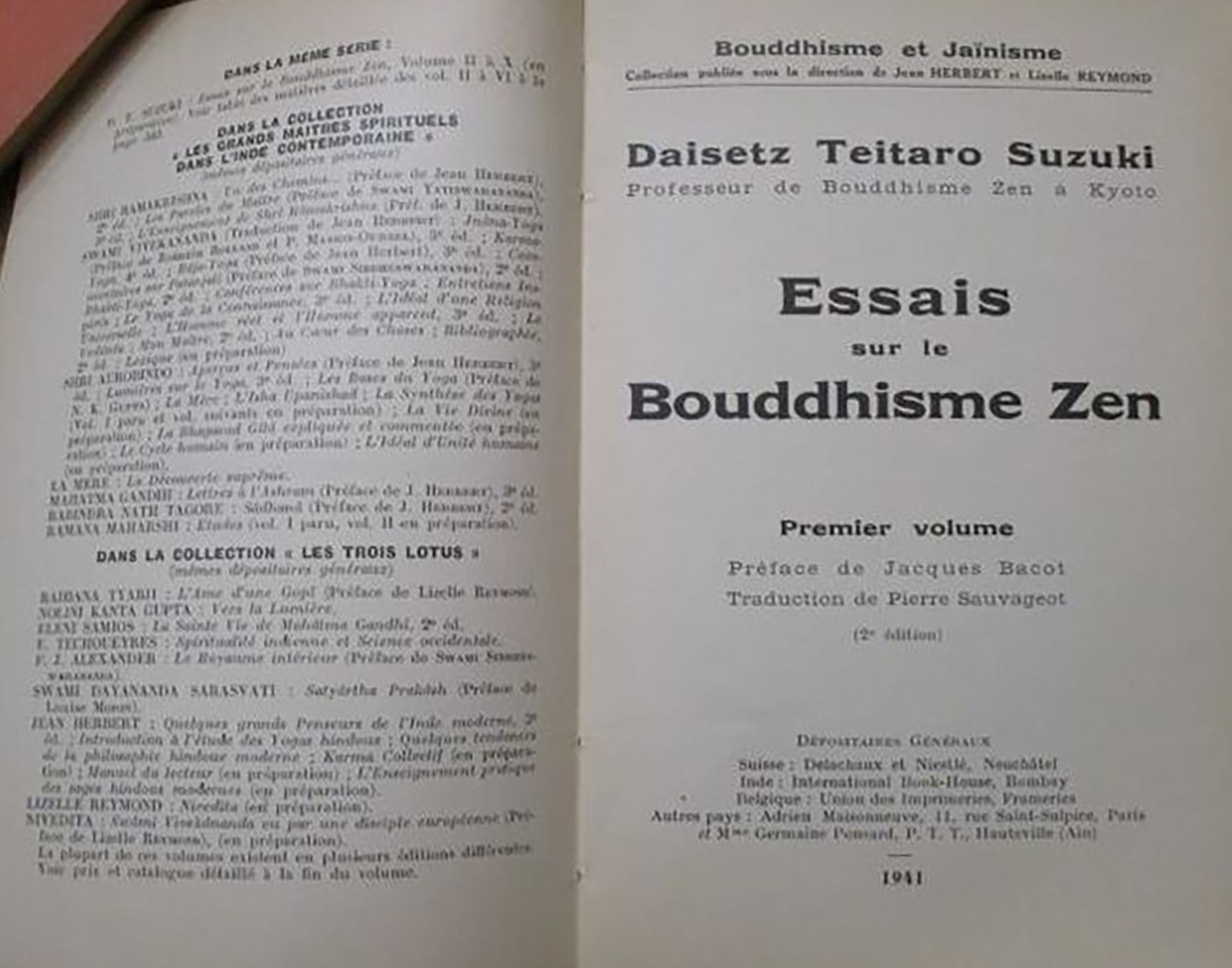
traduction sous la direction de Jean Herbert et Lizelle Reymond
éd. Adrien Maisonneuve, Paris, 1940
La diffusion au compte-gouttes
En suivant les différentes éditions de "Aux source de la Joie", entre 1943 et 1946, on constate que trois maisons d'édition ont été ciblées par Jean Herbert :
- Delachaux & Niestlé en Suisse (politiquement neutre pendant la guerre)
- Paul Derain (coll. Les Trois Lotus) à Lyon
- Adrien Maisonneuve (coll. Les Grands Maîtres spirituels dans l'Inde contemporaine - dirigée par Jean Herbert et Lizelle Reymond) à Paris.
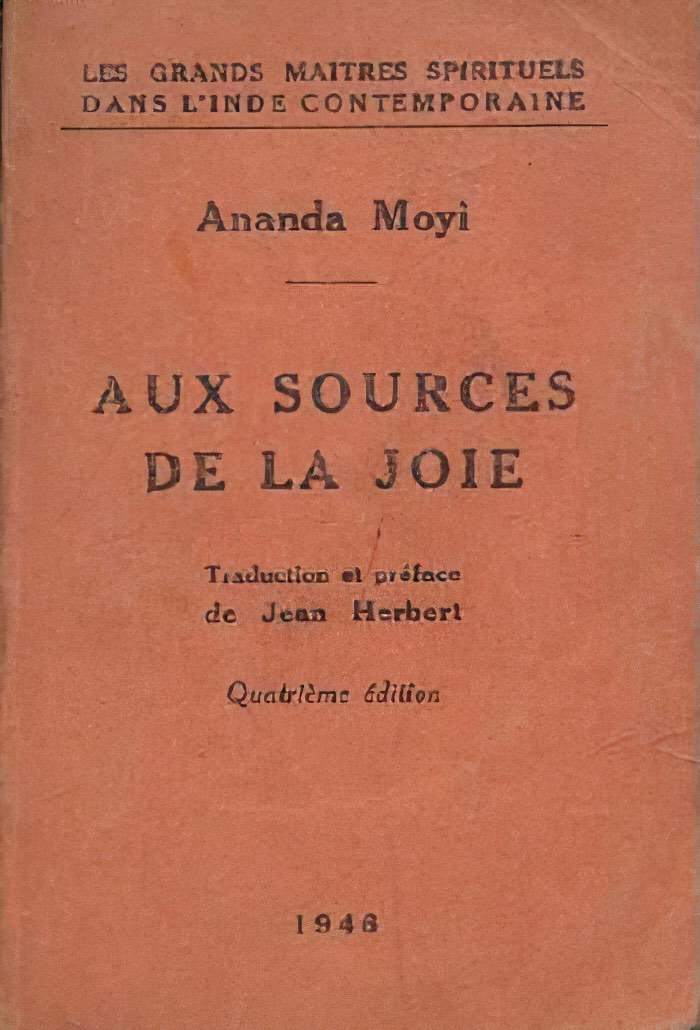
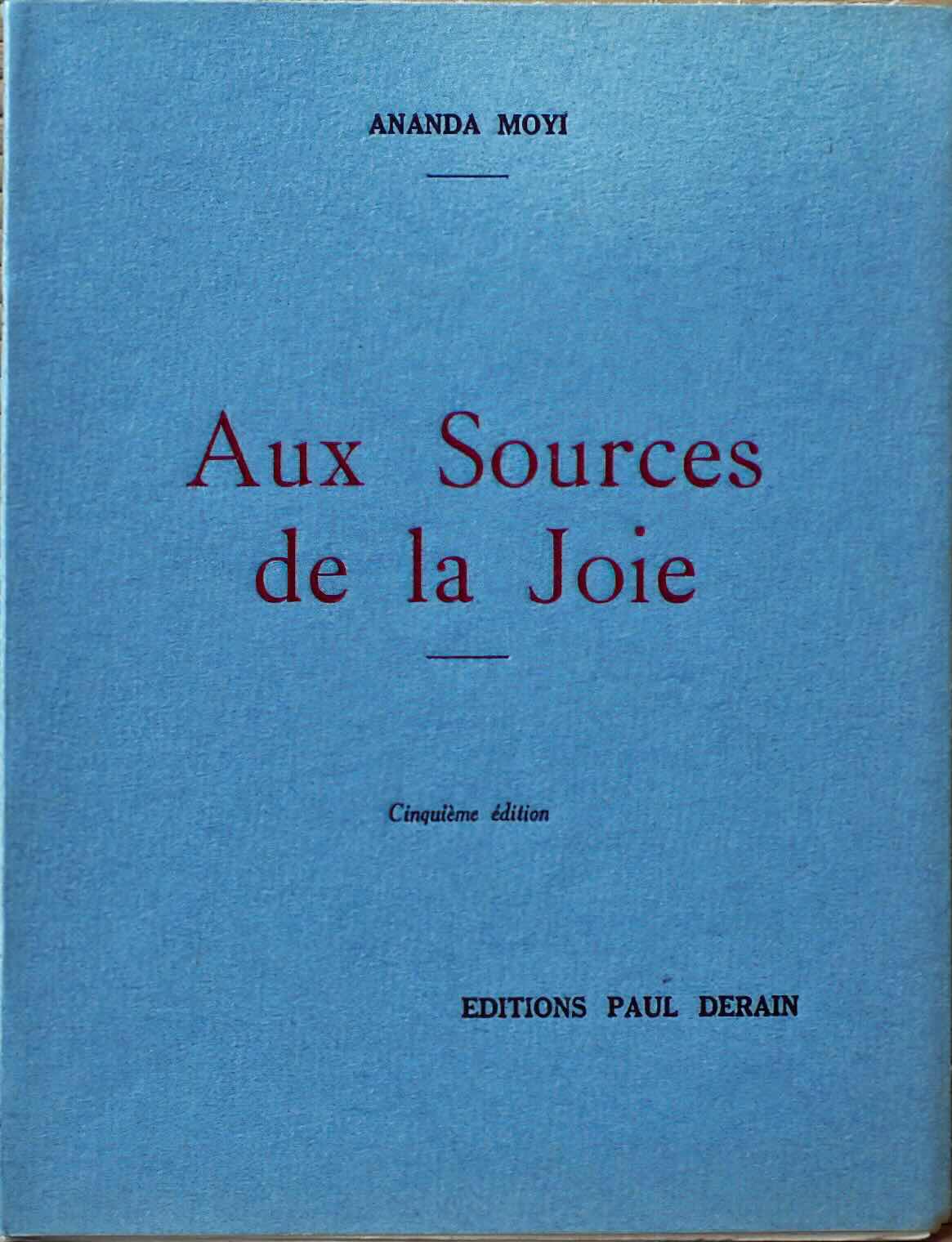
Comment cela pouvait-il être possible ?
Entre 1935 et 1945, Jean Herbert n’est lié par aucun contrat d'exclusivité. Quand il obtient les droits d'un texte ou termine une traduction, il la propose à l'éditeur qui a les reins assez solides — ou le stock de papier nécessaire — pour l'imprimer.
Le principal outil de contrôle n'est pas toujours l'interdiction textuelle, mais l'allocation du papier, une denrée rationnée.
Le papier, devenu rare à cause de l’arrêt des importations et des réquisitions de la production nationale au profit de l’Allemagne, est contingenté à partir de décembre 1941.
Les grands éditeurs doivent négocier chaque tonne.
Des maisons d'érudition comme Maisonneuve publient de très petits tirages (quelques centaines d'exemplaires), destinés à un public de spécialistes. Elles passent sous le radar des quotas de papier de la propagande, n'étant pas perçues comme une menace ou un enjeu.
Delachaux & Niestlé, c'est une maison neuchâteloise dont l'identité éditoriale profonde était la pédagogie et la psychologie (Piaget, Bovet, Freinet), et qui a naturellement glissé vers les questions de l'intériorité et du développement de la personne — d'abord par la psychologie selon Jung, puis par "les sciences religieuses" en 1943, très probablement à l'initiative de Jean Herbert. Publier Aux sources de la joie en 1943, c'est pour Delachaux & Niestlé une première incursion dans les spiritualités vivantes de l'Orient
Durant cette même période, Herbert fonde la collection Les Trois Lotus chez Derain à Lyon.
Ce choix n'est pas anodin : la ville de Lyon est en "zone libre" (zone non occupée par les Allemands) jusqu'en novembre 1942. L'éditeur Derain constitue donc le point d'ancrage pour l'édition française et, au pire, le relais naturel pour distribuer en France des ouvrages produits depuis Genève. Même après l'Occupation totale de la France, Lyon conserve une vie intellectuelle et éditoriale plus active que Paris sous la botte nazie.
Mais au même moment Jean Herbert fonde aussi, chez Adrien Maisonneuve, la collection "Les Grands Maîtres Spirituels dans l'Inde contemporaine". C'était, justement, pour toucher le réseau parisien de libraires orientalistes, qui existait depuis le XIXe siècle et continuait à fonctionner sous l'Occupation pour les ouvrages non politiques.
Pour Herbert, ce choix va de soi : Maisonneuve est le point de passage obligé de tout orientaliste parisien depuis des décennies. C'est là que se retrouvaient les indianistes, les bouddhologues, les théosophes cultivés. Ce n'est pas Herbert qui démarchait Maisonneuve, c'est une maison qui attendait exactement ce genre de textes.
On voit donc qu'un même texte pouvait ainsi commencer sa vie à Genève ou sous la collection Les Trois Lotus chez Derain à Lyon, avoir un tirage de complément dans la collection Les Grands Maîtres Spirituels chez Maisonneuve à Paris, pour finalement être stabilisé plus tard (Jean Herbert fondera la collection "Spiritualités vivantes" chez Albin Michel après la guerre, en 1946).
La Réception
Publier et lire des textes de sages hindous ou bouddhistes dans la France occupée des années 1940 peut sembler surréaliste. C'est pourtant à ce moment précis que le travail de Jean Herbert connaît un écho puissant et singulier. Bloquée dans un quotidien étouffant, sous la censure et la violence nazie, une partie de l'intelligentsia française va trouver dans ces textes une bouffée d'oxygène insoupçonnée.
Que ce soit pour s'informer ou pour se distraire, la lecture ne cesse pas du tout durant les années d'Occupation.
"Ce désir de lecture est perçu à travers l’augmentation des demandes dans les bibliothèques publiques et l’augmentation des prêts de livres. L’offre est déficitaire par rapport à la demande. Pour pallier la censure et le manque de livres, des marchés noirs sont organisés pour diffuser des livres interdits ou disparus. Le livre devient un capital pour les familles permettant d’arrondir les fins de mois. Même pendant les années noires, la quête de distraction domine le domaine de la lecture (...)" ("Lire sous l'Occupation", Jacques Cantier)
Les exemplaires de "Aux Sources de la Joie" s'écoulent si vite que la 3e édition sort la même année, en 1943. On retrouve des exemplaires portant la mention "3ème édition" dans la collection Les grands maîtres spirituels dans l'Inde contemporaine, et jusqu'à une "cinquième édition" chez Derain.
L'attrait pour Aux Sources de la Joie est lié au sérieux du travail fournit par Jean Herbert, bien sûr... mais aussi à son format ; des enseignements spirituels brefs, en général une page, précisément un format accessible, fragmenté, propice à une lecture de refuge ou de méditation en temps de trouble, qui convenait parfaitement au lecteur de 1943.
Lire Sri Aurobindo, Aux Source de la Joie ou le Zen sous l'Occupation est un acte de résistance intérieure. Face à l'omniprésence de la propagande nazie, du rationnel militarisé et de la défaite morale, l'Orient d'Herbert offre un espace de liberté absolue que la Gestapo ne peut pas contrôler : la conscience pure.
Jean Herbert était disciple. Pour lui, ces textes n'étaient pas de la "littérature orientale" : ils contenaient une vérité que l'Occident ne pouvait pas se permettre d'ignorer, surtout en pleine guerre. La crise de civilisation rendait la transmission encore plus urgente.
L'Orient nous a fournit la clé, a-t-il dit, la clé de la continuité :
"Tandis qu’en Occident, nos recherches scientifiques nous conduisent à des fragmentations, des subdivisions, des oppositions croissantes, l’Orient nous apprend la continuité de toutes choses, l’enchaînement ininterrompu des événements; la continuité entre l’homme et la nature, entre les différents règnes, entre l’homme et Dieu, entre les différentes espèces d’hommes; la continuité entre les plans matériels et subtils; la continuité de l’espace et celle du temps; un immense ensemble où tout se coordonne et s’harmonise."
Sources :
- Lire sous l’Occupation Jacques Cantier CNRS Ed, Coll. « Seconde Guerre mondiale », 2019
- L'édition sous haute surveillance durant l'Occupation, Elisabeth Parinet
- Les carnets du yoga, n°5, mai 1979
- A la rencontre de Mâ Ânandamayî, Madou, Ed Medirep, 1986
- Jean Herbert : entretien avec Jean Biès (Vandoeuvres, 1974)
- Revue 3eMillénaire - Question à Jean Herbert de Jean Varenne. (No 6. 1er Trimestre 1975)
- Fais ce que dois, advienne que pourra - par Bruno Sourdin (Rennes, novembre 1979)
- L’invention de l’Inde, Entre ésotérisme et science Roland Lardinois CNRS, 2007
- L'événement indien de la littérature française, Guillaume Bridet, UGA, 2014
- L'Orient de l'âme, par Marc de Smedt
